

In many Malaysian kitchens the drinking-water decision is not “filter or no filter.” It is where the filter lives. Under-sink systems hide the housing in a crowded cabinet, feed a dedicated tap, and change how you cook, rinse bottles, and host guests. This piece is informational. It focuses on install space, cartridge habits, and when point-of-use under the sink beats a freestanding dispenser.
Start with the cabinet, not the glossy cutaway
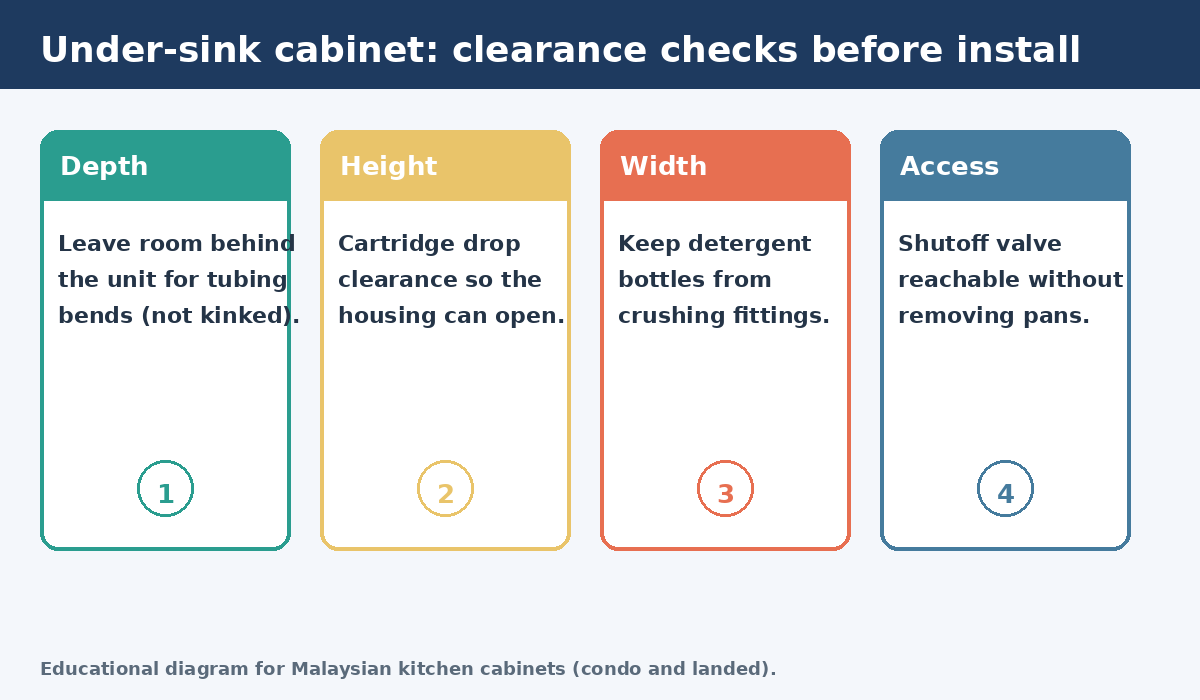
Condo wet kitchens and landed homes share one habit: the under-sink cupboard already holds detergent, a bin, spare pans, and a nest of pipes. An under sink water filter only works if that chaos still leaves depth for tubing bends, height to drop a cartridge, and a shutoff you can reach without emptying the shelf every time. Measure before you fall for a slim brochure photo.
Quick-change heads need twist room. Housing-style sumps need vertical clearance and a drip tray you can slide under. If the cold-water valve is seized or buried behind a false panel, fix access first. Product pages for an under-sink drinking water filter are useful for footprint and faucet options, but your tape measure and a torch still win.
Point-of-use under the sink versus a dispenser
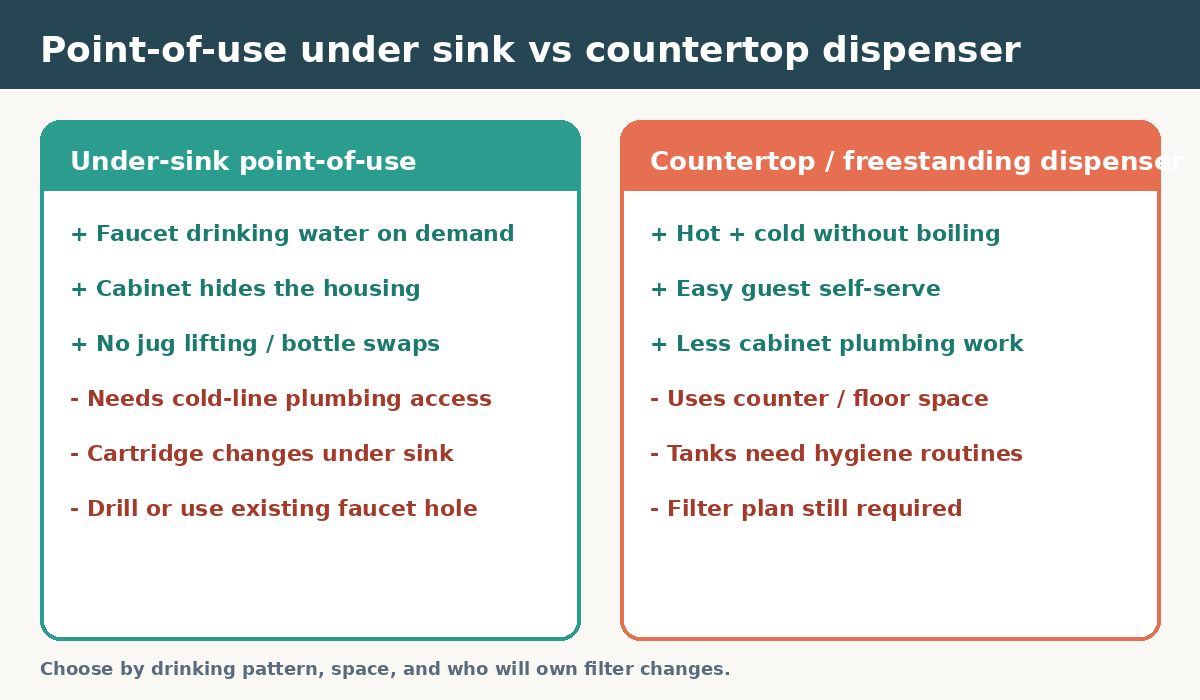
Point-of-use (POU) under the sink treats water at one drinking tap. A countertop or freestanding dispenser stores and serves water, often hot and cold, with its own tank hygiene rules. Families who mainly want clean water for cooking, bottle filling, and plain drinking often prefer the cabinet-hidden route. Offices and tea-heavy households may still want a dispenser because guests self-serve without crowding the sink.
POU shines when counter space is scarce and you already trust a dedicated faucet. Dispensers shine when you need temperature convenience and do not want to plumb another spout. Neither replaces whole-house treatment when the problem is every tap. The EPA overview of point-of-use and point-of-entry devices is a calm way to keep those categories straight before you compare local product lines.
If you are still surveying broader indoor filtered tap setups, read them as layout choices (where water is treated and where it exits), not as a single “best” label.
Install checks Malaysian kitchens often skip
Shut the cold supply and confirm it actually stops. Note whether you need a hole for a drinking faucet or can reuse a soap-dispenser opening. Plan square tube cuts, gentle bends (no kinks against the bin), and a leak-check window after pressure returns. Humid cabinets punish slow drips: a damp baseboard today is a mould story next month.
Hire a plumber when the shutoff is stuck, the sink deck is stone you should not drill casually, or the cold line is hard copper you are not equipped to adapt. A careful educational walkthrough helps you understand the sequence even if you are not the person holding the wrench.
This Old House under-sink install walkthrough. Treat it as orientation; follow your model manual and local plumbing practice.
Cartridge changes without flooding the cupboard
Write the install date on the housing with a marker. Most Malaysian households change on months or litres, whichever comes first, then shorten the interval if taste, odour, or flow drops early after heavy cooking weeks. Depressurise by closing the supply and opening the drinking tap before you twist a quick-change cartridge or open a sump. Keep a shallow pan ready. Check O-rings for grit, reseat them clean, and flush new carbon until the water runs clear.
Consumer guidance from the EPA home drinking-water filtration fact sheet stresses matching the device to the problem and keeping up maintenance. Certification marks on packaging (for example NSF/ANSI claims) only stay meaningful if the cartridge you buy matches the listed model. For faith-sensitive households comparing materials and certifications, a plain-language halal filter notes page can sit beside the technical datasheet without turning the decision into a sales script.
Taste, flow, and when to rethink the setup
Cloudy first litres after a change are often air or carbon fines; keep flushing. Persistent chlorine taste usually means an overdue carbon stage. Sudden low flow can be a clogged sediment stage, a kinked tube, or a half-closed valve. If every tap in the home tastes odd, an under-sink drinking spout alone will not fix outdoor or bathroom lines. Industry explainers from the Water Quality Association help separate aesthetic fixes from broader water-quality questions.
Rethink the layout when the cabinet cannot stay dry, when nobody in the household will own cartridge day, or when guests constantly need hot water at a second station. In those cases a dispenser (or a second POU point) may share the load rather than stretch one under-sink unit past its design.
This month: photograph the open cabinet, measure depth and cartridge drop height, and put the next filter date on a shared calendar. If flow slows before that date, move the reminder earlier instead of waiting for a dry spout during dinner prep.